
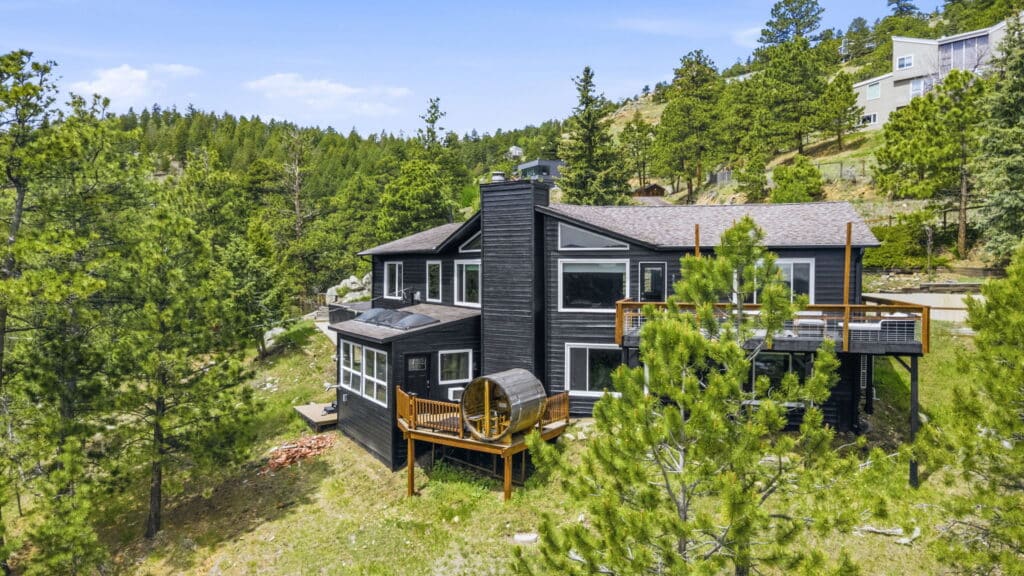
If you own or want to buy a home in Evergreen, Conifer, Bailey, Pine or any foothills town, wildfire risk is now part of every conversation. It affects what buyers ask, what insurance costs, and sometimes whether a sale closes on time.
The summer of 2026 made that clear. Several fires were declared disasters in early July, and hundreds of homes were lost in Pueblo and Custer counties (Colorado Sun). Insurers responded by tightening coverage in high-risk areas.
The good news: a lot of wildfire risk is within your control. Below is what mountain homeowners, sellers and buyers should know.
Defensible space: the three zones around your home
Fire experts split the area around a house into three zones. The closer to the house, the stricter the rules. These are based on guidance used by Colorado communities such as Arvada; check your own county or fire district for local requirements.
| Zone | Distance from house | What to do |
|---|---|---|
| Zone 1 | 0–5 feet | Use gravel, rock, concrete or pavers instead of wood mulch. Remove shrubs and debris. No firewood here. Trim tree branches 10 feet back from the chimney. |
| Zone 2 | 5–30 feet | Remove dead plants. Space out shrubs. Prune tree branches 6–10 feet off the ground. Keep tree crowns 10 feet from the house. Store firewood at least 30 feet away. |
| Zone 3 | 30–100 feet | Thin trees so crowns are 6–10 feet apart. Clear dead plants and large piles of brush or slash. |
Low-cost fixes that make a big difference:
- Clean pine needles out of gutters and off the roof every fall.
- Cover attic and foundation vents with fine metal mesh to keep embers out.
- Swap wood mulch near the house for rock.
- Move firewood, propane tanks and patio furniture cushions away from the house.
- Make your address visible from the road so fire crews can find you.
Homeowners insurance in high-risk areas
Insurance is where wildfire risk hits buyers and sellers hardest. Some mountain homeowners have seen non-renewals or big premium jumps, and some buyers struggle to get a policy before closing.
Here is what has changed in Colorado (Colorado Sun):
- Wildfire risk scores must be explained. Under a 2026 law (HB 1182), insurers must give you a plain-language explanation of your home’s wildfire risk score, which they use to set your premium.
- The Colorado FAIR Plan is a last resort. It is for homeowners turned down by nearly every other insurer. It covers the home’s cash value, not full rebuilding cost, and does not cover contents. It is not cheap, so most people should shop the regular market first.
- New mitigation rewards are coming. A 2026 law (SB 155) created a program to reward homeowners who harden their homes. Grants may start in 2027.
- Watch for moratoriums. During active fires, many insurers (including the FAIR Plan) pause new policies in nearby areas. That can delay a closing.
Tip: Keep photos, receipts and any fire district inspection reports for mitigation work. They help when you shop for insurance or talk to an underwriter.
For sellers: mitigate before you list
Buyers now ask about wildfire risk early, and their insurance quote can make or break the deal. A home that is already mitigated is easier to insure and easier to sell.
- Do the work in fall or early spring. Fall is a good time to thin trees, clear brush and clean gutters before winter.
- Ask your fire district for a free assessment. Many mountain fire districts will walk your property and give you a written report. That report is a strong marketing tool.
- Keep a mitigation file. Gather receipts, before-and-after photos, contractor invoices and any inspection reports. Share it with buyers and their insurance agents.
- Know the new building code. Colorado’s Wildfire Resiliency Code now applies in wildfire-prone areas. If roof or siding repairs cover more than 25% of the surface, the whole roof or wall may need to meet the new standards (Fire Engineering). Factor this into any pre-listing repairs.
- Get an insurance quote early. Knowing what a policy costs on your home helps you price it and answer buyer questions.
If you are selling an inherited mountain property, this work can feel overwhelming from a distance. We can connect you with local mitigation crews and handle the details.
For buyers: what to check before you commit
Wildfire risk should not scare you away from mountain living, but it should shape your due diligence.
- Get an insurance quote right away. Do it during your inspection period, not the week before closing. If coverage is hard to find, you want to know while you can still walk away.
- Ask the seller for mitigation records. Look for receipts, photos and fire district reports.
- Look at the roof and siding. Class A fire-rated roofing, metal or composite materials, and ember-resistant vents are all good signs. Wood shake roofs are a red flag.
- Check access and evacuation routes. How many ways in and out? Is the driveway wide enough for a fire truck? Is there a nearby water source?
- Look at the trees. Dense, overgrown forest right up to the house means work and cost after you move in.
- Ask about the HOA or road association. Some mountain communities fund shared mitigation or are recognized Firewise communities.
Thinking about buying or selling in the mountains?
Wildfire mitigation is now part of owning a mountain home in Colorado. Done well, it protects your family, makes insurance easier to get, and adds value when you sell.
Herzog Properties helps buyers and sellers across the foothills and mountains, from Evergreen and Conifer to ski towns like Breckenridge and Frisco. Call us at (720) 403-2940 or reach out here for a free consultation.